Plan your trip
Jordan food: mansaf, falafel and hummus, maqluba, zarb and knafeh
Jordanian food is built for sharing. Lunch is the main meal, a guest is fed before anything else is discussed, and the dish that marks every wedding, every funeral and every reconciliation is mansaf, lamb and rice under a sauce of dried yogurt. Around it sit the everyday foods of Amman, falafel, hummus and a slab of hot knafeh, the home dishes such as maqluba and musakhan that rarely appear on restaurant menus, and the Bedouin zarb, cooked under the sand in Wadi Rum. This guide follows them in route order, with a named place for each and the published prices.
In this guide
Find the location ↗ — opens in a new tabThe short answer
Spend two nights in Amman for the street food and mansaf, then eat the Bedouin food in the south. In Downtown Amman, have falafel and hummus at Hashem and knafeh at Habibah nearby, and have mansaf for lunch at Jabri on Wasfi Al Tal Street. Book an afternoon class at Beit Sitti in Jabal al-Weibdeh to cook maqluba or musakhan: it costs JOD 35 to 50 a person by group size and ends with a four-course meal. In Wadi Musa, the evening class at Petra Kitchen costs JOD 35 with dinner. A Wadi Rum camp night includes a Bedouin dinner, sometimes zarb from the underground oven.
- Key point
- Two nights in Amman, then the evenings in Wadi Musa and Wadi Rum on the way south
- Where it applies
- Downtown Amman and Jabal al-Weibdeh for street food and a cooking class; Wadi Musa and Wadi Rum for the evening meals
- Timing
- Ramadan is expected to begin on or around 8 February in 2027. During Ramadan, do not eat, drink or smoke in public between sunrise and sunset. Iftar, the evening meal that breaks the fast, follows sunset.
Mansaf: the dish of every occasion
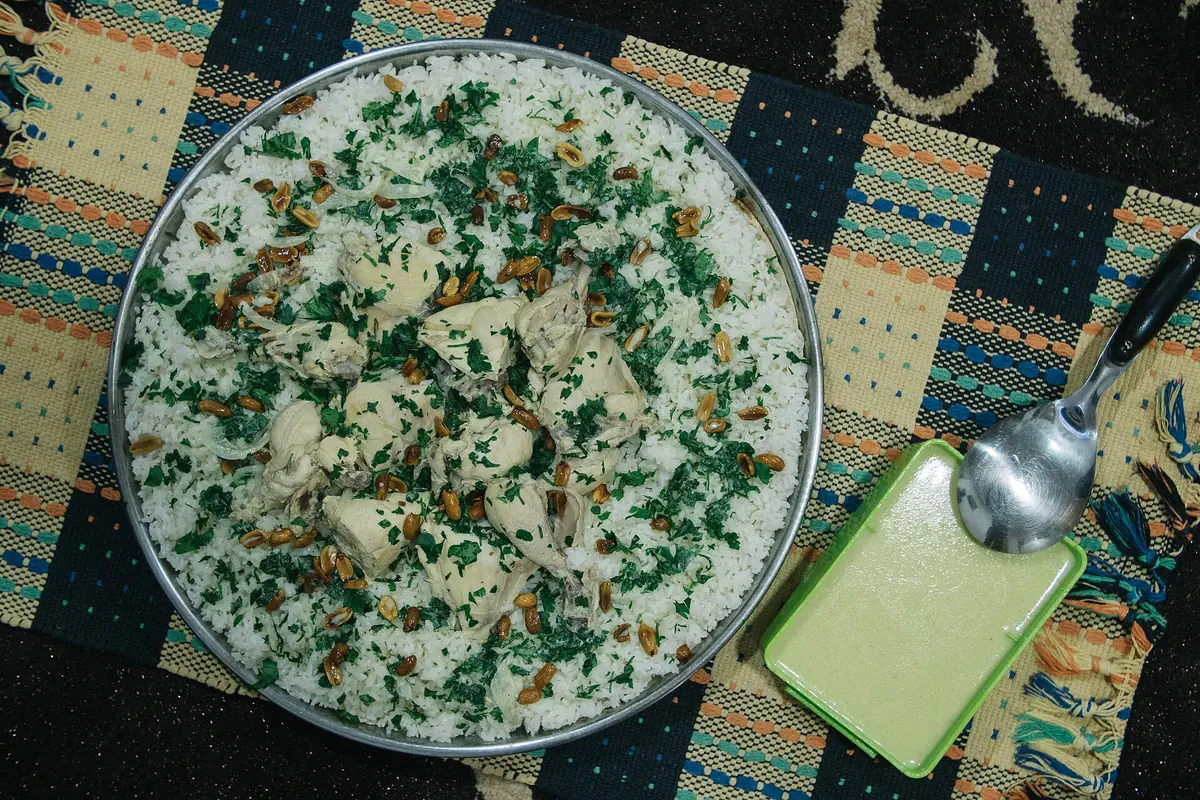
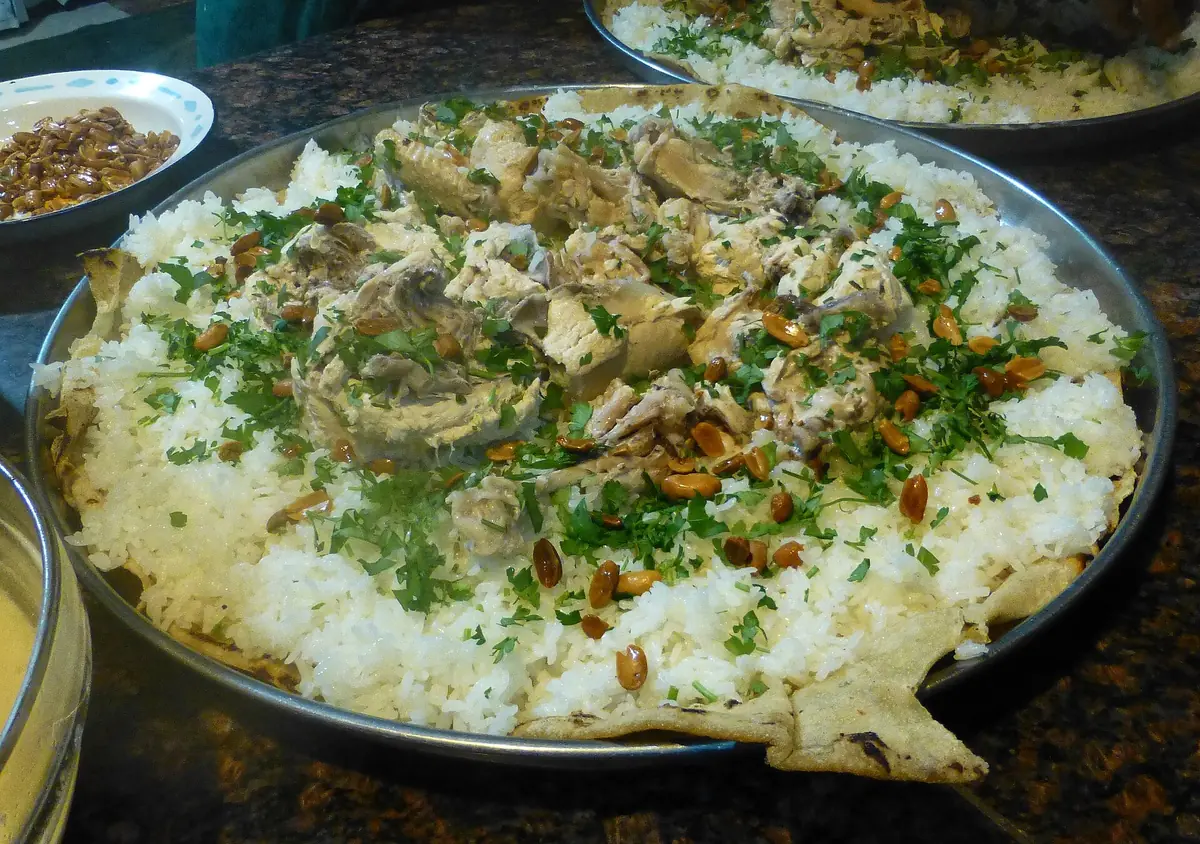
Mansaf is lamb cooked in jameed, a dried and fermented yogurt, served on a large tray of Arabic rice over thin bread. Everyone eats together from the same dish. Mansaf is Jordan's national pride: it marks weddings and joyful occasions, and it is also served at condolences and to mend a quarrel. Eating it is a skill of its own. Traditionally it is eaten by hand, with one hand only. Use the bread and the jameed to press rice and meat into a small ball before you lift it; Jordanians will be impressed by the technique.
Mansaf is a lunch dish, cooked in quantity, so the easiest way to taste it is at a restaurant that keeps it on its menu every day. Jabri, a traditional Jordanian restaurant on Wasfi Al Tal Street in Amman, lists mansaf as the dish it is known for. Jameed is dairy, so mansaf is not for anyone avoiding milk products.
The same family of dishes runs through the country: al-ruqaqa, thin bread with ghee and jameed, and al-mujallalah, popular in the south, bread dipped in hot jameed with mutton or chicken and fried nuts on top.
Prices and times checked 28 November 2026
Falafel, hummus and knafeh in Downtown Amman
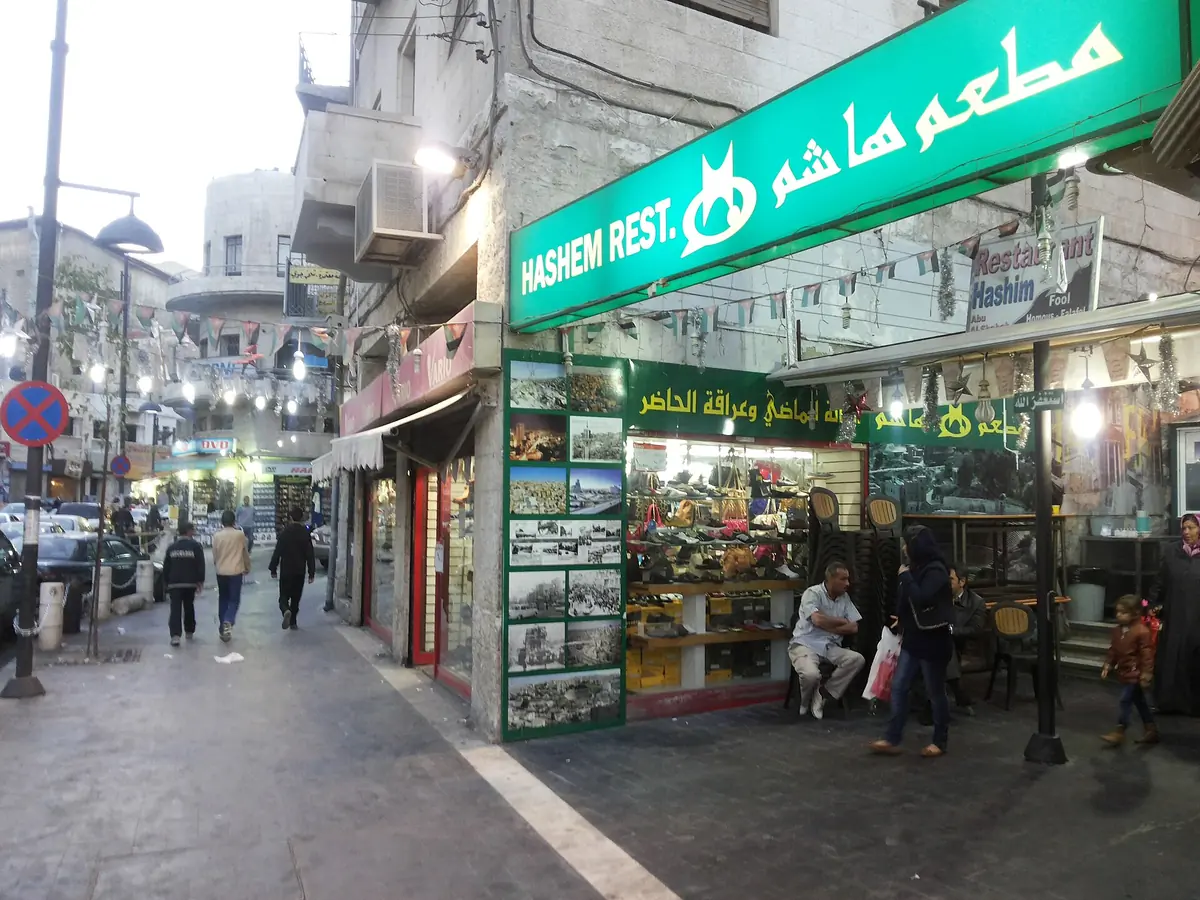
Falafel and hummus are the breakfast of choice for Jordanians, especially on Fridays, and the same small restaurants sell ful (stewed fava beans) and fatteh hummus, chickpeas over bread with yogurt. The classic place to eat them is Hashem Restaurant in Downtown Amman, one of the oldest restaurants in the country, whose Downtown branch is usually full at any time of day.
Knafeh comes next, nearby at Habibah Sweets, one of the best-known places for knafeh in Amman: a tray of soft white cheese under a crust of semolina or shredded pastry, soaked in syrup and cut hot. People queue for the Nabulsi knafeh and eat it in the courtyard near the shop. Shawarma is the other everyday food of Amman, and many restaurants specialise in it.
Downtown is also where to start the Amman sights: the Roman Theatre and the climb to the Citadel are a short walk from both, and our Amman guide has the day.
Prices and times checked 28 November 2026
Maqluba and musakhan: dishes cooked at home
Some of the best Jordanian food is cooked in homes rather than restaurants. Maqluba, whose name means upside down, is rice cooked in one pot with aubergine, potato and cauliflower, usually with chicken or meat, and turned out onto a tray at the table, with salad or yogurt on the side. Musakhan, a Palestinian dish that Jordanians have taken as their own, is roast chicken with onions and sumac. Mujaddara is lentils and rice with fried onions, usually served with salad or yogurt.
Beit Sitti, at 16 Mohammad Ali As-Saadi Street in Jabal al-Weibdeh, one of the oldest neighbourhoods of Amman, runs cooking classes in the founders' grandmother's home. Its recipes include maqluba, musakhan, mansaf, knafeh and mulukhiyeh. The morning session cooks breakfast (falafel, fatteh hummus, mutabal, galayet bandora and fresh Arabic bread), and the group session costs JOD 15. The afternoon class cooks a four-course meal of mezze, salad, main course and dessert, served with lemonade, tea and coffee. It is priced per person by the size of the booking: JOD 35 each for five or more, JOD 40 for four, JOD 45 for three, JOD 50 for two, and JOD 100 for one person on a private session. Book it for your second Amman day.
Prices and times checked 28 November 2026
The south: Petra Kitchen and a Wadi Rum fire pit
Petra Kitchen, on Tourism Street at the Petra Boutique Hotel in Wadi Musa, the town at the gate of Petra, runs a cooking class every evening for JOD 35 a person. You prepare a traditional Jordanian meal with local chefs and then sit down to eat it. Classes begin at 18:30 from March to October and at 18:00 from November to February, so the class fits the evening after a long day on the Petra trails. Book it for an evening when you are not going to Petra by Night. For a second evening, Lorans Kitchen, one of the experiences Visit Petra lists, serves dinner for JOD 15 a person after a lively session of dabkeh music and taboun bread baking. The Petra guide has the day tickets.
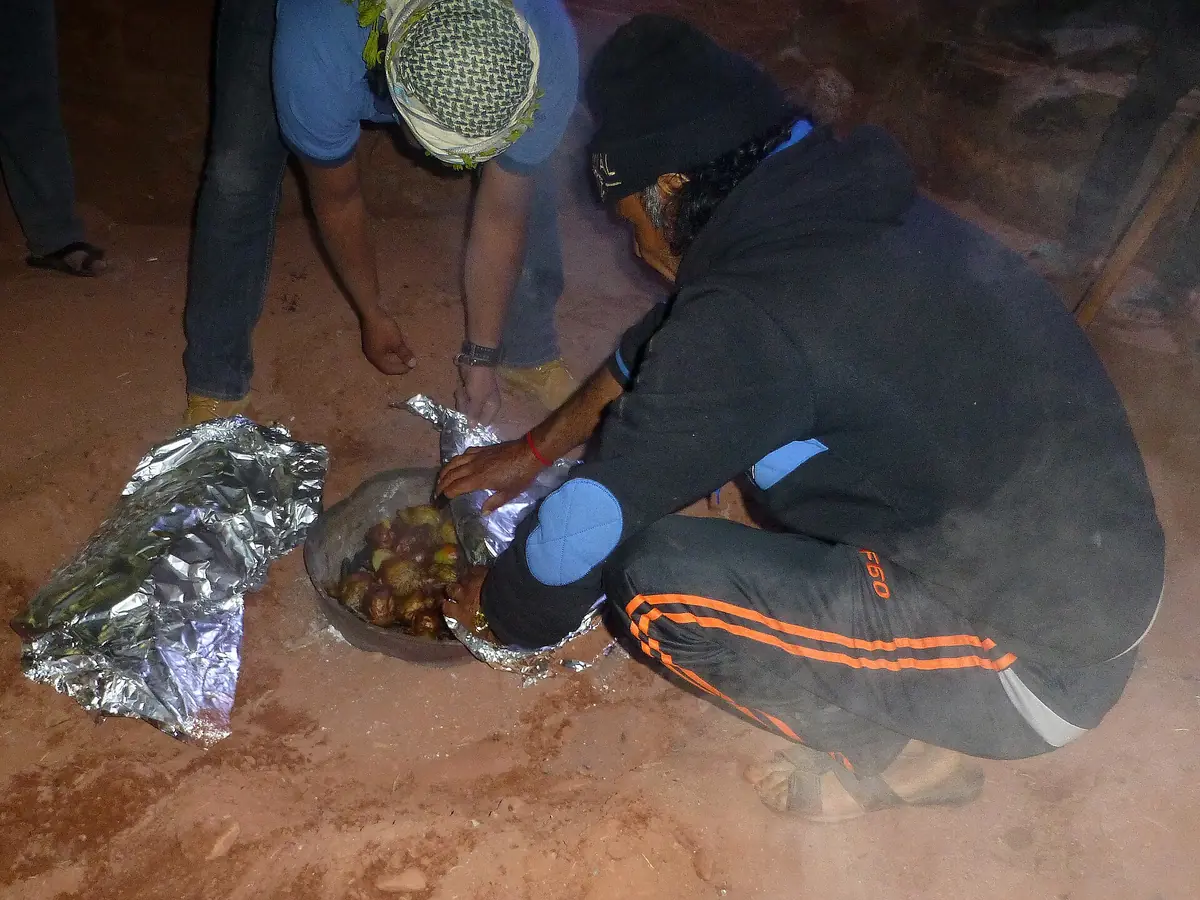
Zarb is the Bedouin dish of the Wadi Rum desert: lamb or chicken cooked in a pit dug about a metre into the ground, lined with bricks and sealed to keep in the smoky taste. Camps serve it at dinner, so you eat it on a night in the desert. Camps such as Wadi Rum Nomads list zarb among their dinners. The Wadi Rum Nomads one-day jeep tour with a night at the camp costs JOD 70 a person for two and includes a Bedouin lunch, dinner and breakfast. Our Wadi Rum guide compares the camps, among them Bedouin Lifestyle Camp, whose four-hour tour with a tent night costs JOD 50 per adult for two to four and includes a dinner cooked under the ground.
Tea comes with almost every stop. A traditional breakfast is served with hot tea with fresh mint, and on a Wadi Rum jeep tour the guide brews Bedouin tea: Bedouin Lifestyle Camp's tours include it, and its overnight tour stops for a glass at sunset. If your trip includes the Red Sea, Aqaba's local favourite is sayyadieh, spiced fish on a bed of rice, or fresh Red Sea fish such as hammur or sultan ibrahim grilled with salad at the cafés and restaurants along the seafront, and the city's Turkish coffee stalls brew coffee in hot sand. France advises against Aqaba and its surroundings except for an imperative reason, so read our health and safety guide before adding it.
Prices and times checked 28 November 2026
What to eat and where to look
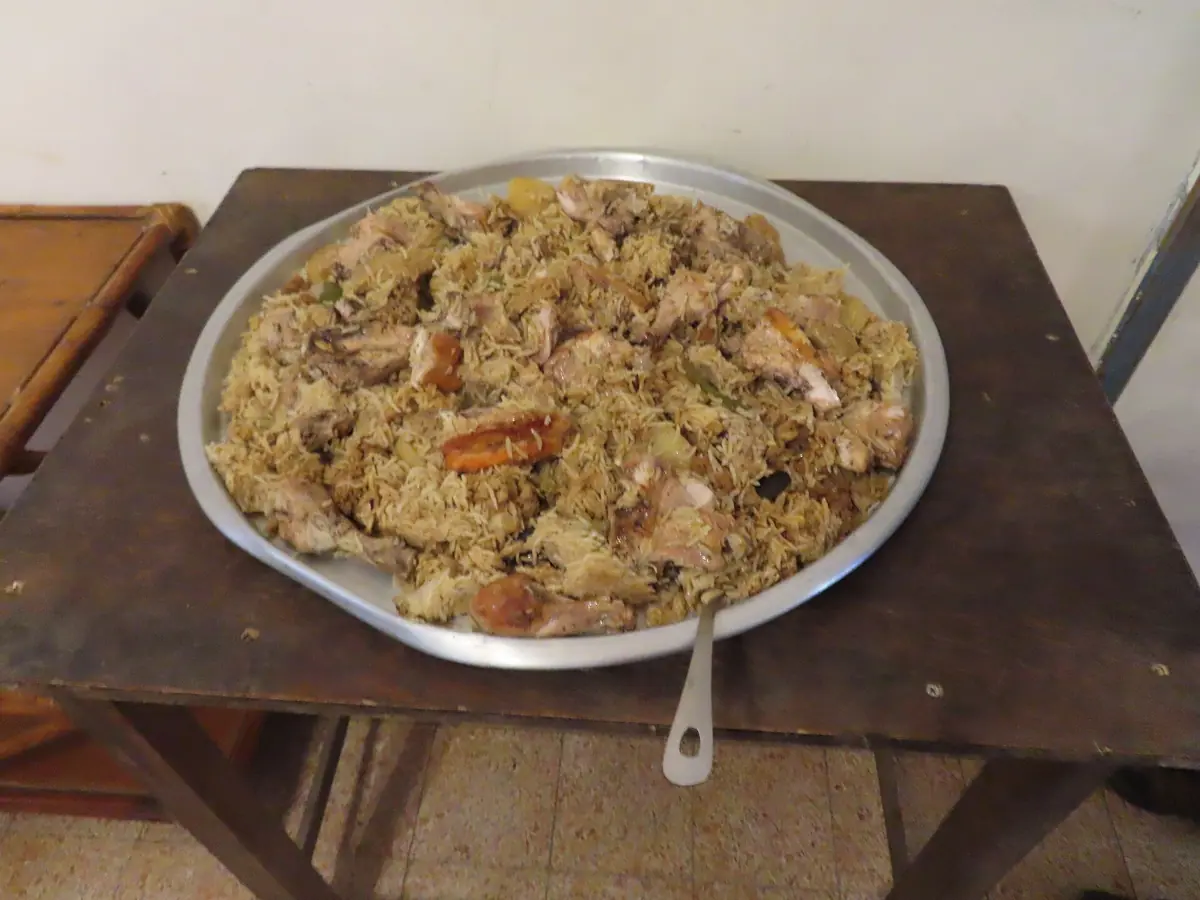
Mansaf
Lamb cooked in jameed, a dried fermented yogurt, on a tray of rice over thin bread; Jordan's national dish, eaten by hand from a shared tray.
- Where to look
- Jabri restaurant, Wasfi Al Tal Street, Amman.
- Fit it into your day
- Lunch on the first Amman day; mansaf is a midday dish.
Falafel and hummus
Fried chickpea balls and chickpea purée with ful and bread, the breakfast of choice for Jordanians, especially on Fridays.
- Where to look
- Hashem Restaurant, Downtown Amman.
- Fit it into your day
- Breakfast before the Roman Theatre and the Citadel.
Knafeh
Soft white cheese under a crust of semolina or shredded pastry, soaked in syrup and served hot.
- Where to look
- Habibah Sweets, Downtown Amman, near Hashem.
- Fit it into your day
- Straight after the falafel, or as an afternoon stop.
Maqluba
Rice cooked with aubergine, potato, cauliflower and chicken or meat, turned upside down onto a tray.
- Where to look
- Beit Sitti cooking class, 16 Mohammad Ali As-Saadi Street, Jabal al-Weibdeh, Amman.
- Fit it into your day
- The afternoon class on the second Amman day.
Zarb
Lamb or chicken cooked in a sealed pit dug about a metre into the ground, the Bedouin feast of Wadi Rum.
- Where to look
- The Bedouin camps of Wadi Rum, as the evening meal of a camp night.
- Fit it into your day
- Dinner on the Wadi Rum night.
What meals, classes and the camp night cost
For everyday meals, our trip-cost guide estimates about JOD 15 a day each for falafel and hummus, a shawarma lunch and a simple dinner, and about JOD 25 with a sit-down dinner of mezze or mansaf. The classes and the camp night publish their prices, and each includes a full meal:
- Beit Sitti, Amman: breakfast group session JOD 15; afternoon class with a four-course meal JOD 35 a person for five or more, up to JOD 50 a person for two, JOD 100 for one person alone.
- Petra Kitchen, Wadi Musa: evening class with dinner JOD 35 a person.
- Wadi Rum Nomads tour and camp night: jeep day, camp night, lunch, dinner and breakfast JOD 70 a person for two, plus the JOD 5 Wadi Rum entry for foreign visitors (free with the Jordan Pass).
Prices and times checked 28 November 2026
Practical questions
Which dish should I try first in Jordan?
Mansaf, lamb in a sauce of dried yogurt on rice. It is the national dish and a lunch dish, so plan it for midday in Amman.
Where can I eat falafel and hummus in Amman?
Hashem Restaurant in Downtown Amman, one of the oldest restaurants in the country, then knafeh at Habibah Sweets nearby.
How much is a cooking class in Jordan?
Beit Sitti in Amman charges JOD 15 for a breakfast group session and JOD 35 to 50 a person, by group size, for an afternoon class with a four-course meal; Petra Kitchen in Wadi Musa charges JOD 35 a person with dinner.
What is zarb and where can I eat it?
Lamb or chicken cooked in a sealed pit dug into the ground. Wadi Rum camps such as Wadi Rum Nomads serve it at dinner, as part of a camp night.
Is Jordanian food easy for vegetarians?
Yes at breakfast and in mezze: falafel, hummus, ful, mutabal and mujaddara are all vegetarian. Mansaf, maqluba with meat and zarb are not.
Keep planning your trip
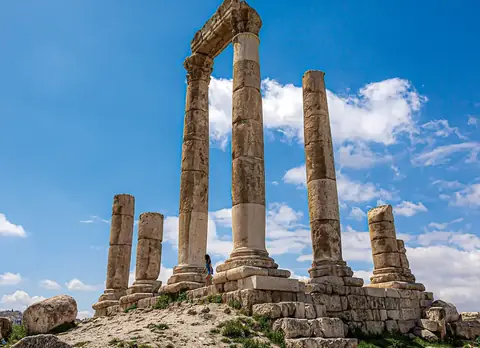
Amman
Plan two nights in Amman: the Citadel and Temple of Hercules, the Roman Theatre, the Jordan Museum, downtown food, Rainbow Street, the airport and the bus to Petra.
Read the guide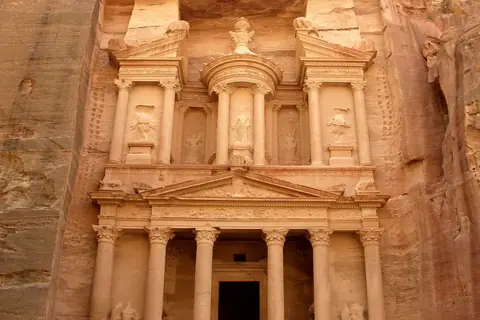
Petra
Two nights in Wadi Musa for Petra: the Siq, the Treasury, the Royal Tombs, the Monastery and the High Place, with ticket prices, hours, Petra by Night and buses.
Read the guide
Wadi Rum
One night in a Wadi Rum camp after Petra: the jeep tour, Lawrence's Spring, Khazali Canyon and Burdah, with the entry fee, tour prices and the drive in daylight.
Read the guide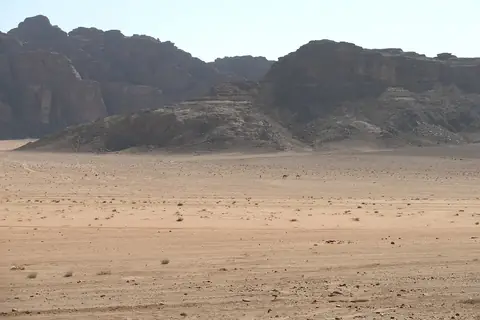
First trip to Jordan
How many days a first Jordan trip needs, the order of Amman, Petra, Wadi Rum and the Dead Sea, how to get between them, and what to book before you fly.
Read the guide
Jordan festivals and events 2027
Jordan's 2027 calendar: Ramadan and the two Eids, Independence Day, the Dead Sea Ultra Marathon, the Jerash Festival, two marathons, Petra by Night and Christmas.
Read the guide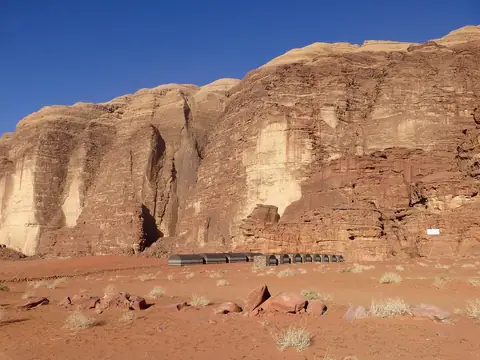
Jordan trip cost
A week from Amman to Petra, Wadi Rum and the Dead Sea by car, five hotel nights included: about JOD 440 a person budget, JOD 630 mid-range or JOD 1,070 comfort.
Read the guideSources and checks before you travel
(20)
- Jordan Tourism Board: Feasting in Jordan ↗ — opens in a new tab
- Jordan Tourism Board (Edutravel): Food and drinks ↗ — opens in a new tab
- Jordan Tourism Board: Amman ↗ — opens in a new tab
- Jabri Restaurant: home page ↗ — opens in a new tab
- Beit Sitti: cook and dine ↗ — opens in a new tab
- Beit Sitti: recipes ↗ — opens in a new tab
- Beit Sitti: Cook & Dine booking ↗ — opens in a new tab
- Beit Sitti: about ↗ — opens in a new tab
- Visit Petra (PDTRA): Petra Kitchen workshop ↗ — opens in a new tab
- Petra Kitchen: home page ↗ — opens in a new tab
- Wadi Rum Nomads: 1-day Wadi Rum jeep tour with overnight ↗ — opens in a new tab
- Wadi Rum Nomads: traditional Bedouin camp ↗ — opens in a new tab
- Government of Canada: Jordan travel advice, laws and culture ↗ — opens in a new tab
- Jordan Tourism Board: entrance fees ↗ — opens in a new tab
- Visit Aqaba (ASEZA): eat and drink ↗ — opens in a new tab
- Visit Petra (PDTRA): Lorans Kitchen ↗ — opens in a new tab
- Bedouin Lifestyle Camp: 4 hours jeep tour with overnight ↗ — opens in a new tab
- Bedouin Lifestyle Camp: 4 hours jeep tour ↗ — opens in a new tab
- France Diplomatie: Jordanie, conseils aux voyageurs (full advice, PDF, French) ↗ — opens in a new tab
- Turkish Diyanet: religious days of 2027 (calculated) ↗ — opens in a new tab
Reference sources for the version dated 29 November 2026. Confirm opening times, access, transport and conditions for your travel dates.
Photo credits
(6)
Mansaf served on a shared tray in Jordan, rice and meat under nuts and parsley
Photograph: Ben Meyer — opens in a new tab · CC BY-SA 4.0 — opens in a new tab
Changes: Resized and converted to WebP; displayed with responsive crops. · Original photograph and licence details ↗ — opens in a new tab
Hashem Restaurant in Downtown Amman, known for falafel and hummus
Photograph: Freedom's Falcon — opens in a new tab · CC BY-SA 3.0 — opens in a new tab
Changes: Resized and converted to WebP; displayed with responsive crops. · Original photograph and licence details ↗ — opens in a new tab
Maqluba just turned out of its pot at a restaurant in Madaba
Photograph: Fallaner — opens in a new tab · CC BY-SA 4.0 — opens in a new tab
Changes: Resized and converted to WebP; displayed with responsive crops. · Original photograph and licence details ↗ — opens in a new tab
Zarb unwrapped after cooking in its pit at a Wadi Rum camp
Photograph: Ji-Elle — opens in a new tab · CC BY-SA 4.0 — opens in a new tab
Changes: Resized and converted to WebP; displayed with responsive crops. · Original photograph and licence details ↗ — opens in a new tab
Mansaf being prepared in the Petra region, here with chicken instead of lamb
Photograph: Ji-Elle — opens in a new tab · CC BY-SA 4.0 — opens in a new tab
Changes: Resized and converted to WebP; displayed with responsive crops. · Original photograph and licence details ↗ — opens in a new tab
A plate of mansaf in Amman: lamb on yellow rice with thin flatbread
Photo: Yuki Ikemori