Amman: the Citadel, the Roman Theatre and two nights in the capital
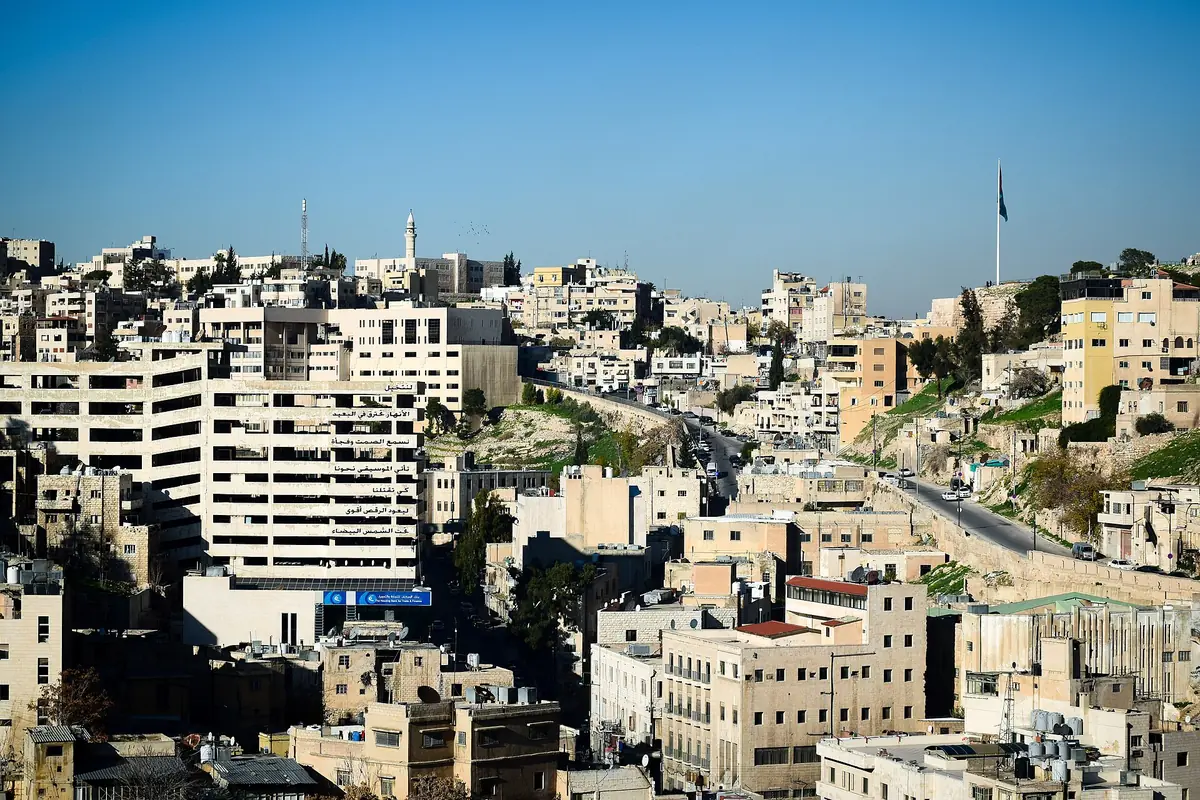
Amman is built over a cluster of steep hills, and the oldest of them, Jabal al-Qal'a, still carries the columns of a Roman temple and an Umayyad palace above the downtown valley. Below it, the Roman Theatre is cut into the hillside opposite, the souks and hummus counters fill the streets around the Grand Husseini Mosque, and the cafés of Rainbow Street and Jabal al-Weibdeh look across the valley at night. Most trips start and end here at Queen Alia airport, so the real question is how many nights to give the capital before the road south, and this guide spends two of them on the old hills and the museums.
In this guide
Find the location ↗ — opens in a new tabThe short answer
Book two nights in Amman, in Jabal Amman or Jabal al-Hussein close to downtown: an arrival afternoon for the Jordan Museum and Rainbow Street, then a full day for the Citadel, the Roman Theatre and the souks, or for a day trip to Jerash. The Citadel costs JOD 3 and the Roman Theatre JOD 2 for foreign visitors. If Petra is on your route, buy the Jordan Pass (from JOD 70) online before you fly: it covers both sites and waives the JOD 40 visa fee if you stay at least three nights in Jordan, as the UK government advises (the pass site's own minimum is two nights, three days), as our entry guide explains. Without a car, book the 06:30 JETT bus from Abdali to Petra next.
- Suggested time
- 2 nights in Amman
- Where to stay
- Jabal Amman or Jabal al-Hussein, a short ride from downtown, the Citadel and the Roman Theatre
- Season and timing
- Amman stands on high ground, so it is cooler than the Dead Sea and Aqaba, and spring and autumn suit long walks up the stairways between its hills. Winter brings rain and the odd cold snap, and the UK government warns of flash floods from November to March. Our best-time guide has the month-by-month picture.
Where to sleep: near downtown, not out by the malls
Amman spreads across many hills, and the distances between them are greater than they look on a map. For a first visit, sleep on one of the hills that ring downtown: Jabal Amman, with Rainbow Street and its cafés, or Jabal al-Hussein and Jabal al-Weibdeh to the north-west, with galleries, old stone houses and the stairways down to the souks. From there the Citadel, the Roman Theatre and the Grand Husseini Mosque are a walk or a short taxi ride away, and Abdali, where the JETT buses leave for Petra, is close too.
Our where-to-stay guide names hotels in Amman with their rates and compares the bases in the rest of the country.
Prices and times checked 28 November 2026
The Citadel: a Roman temple and an Umayyad palace above the city
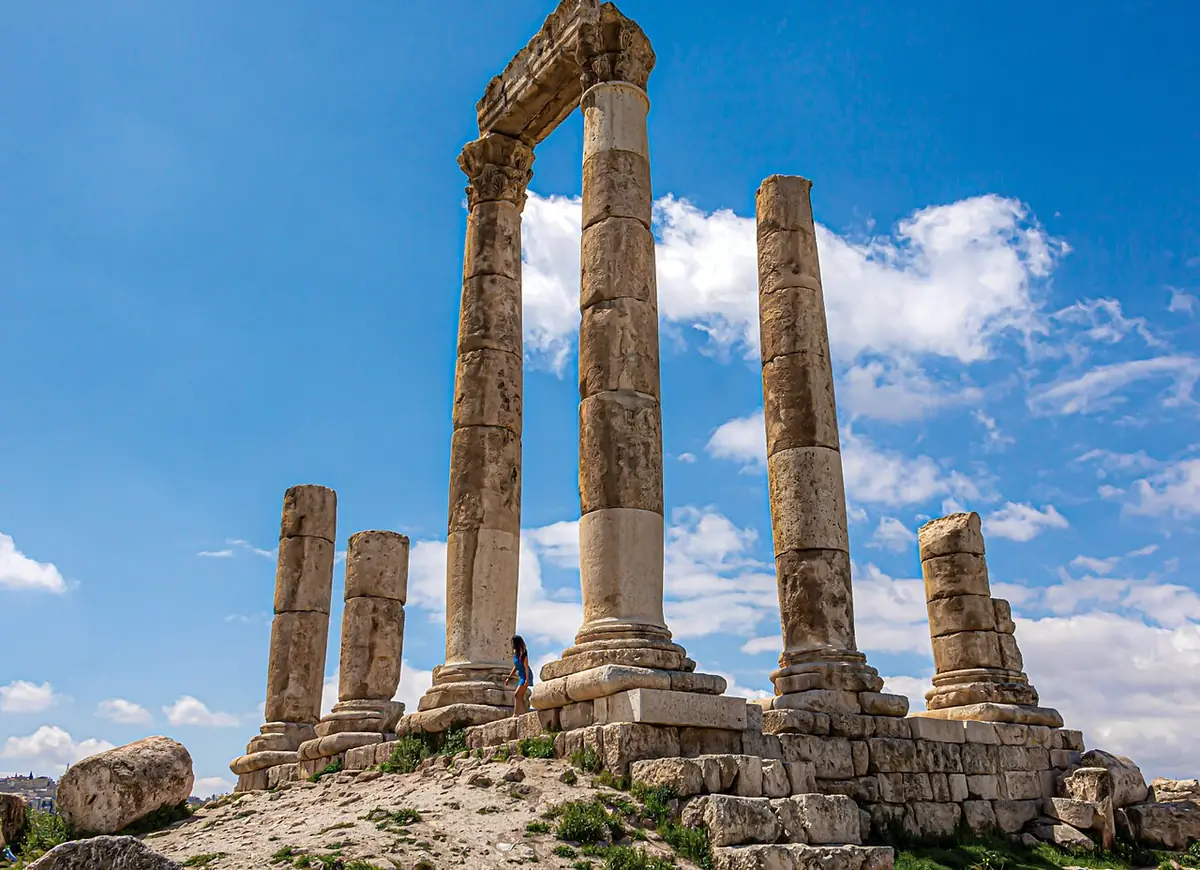
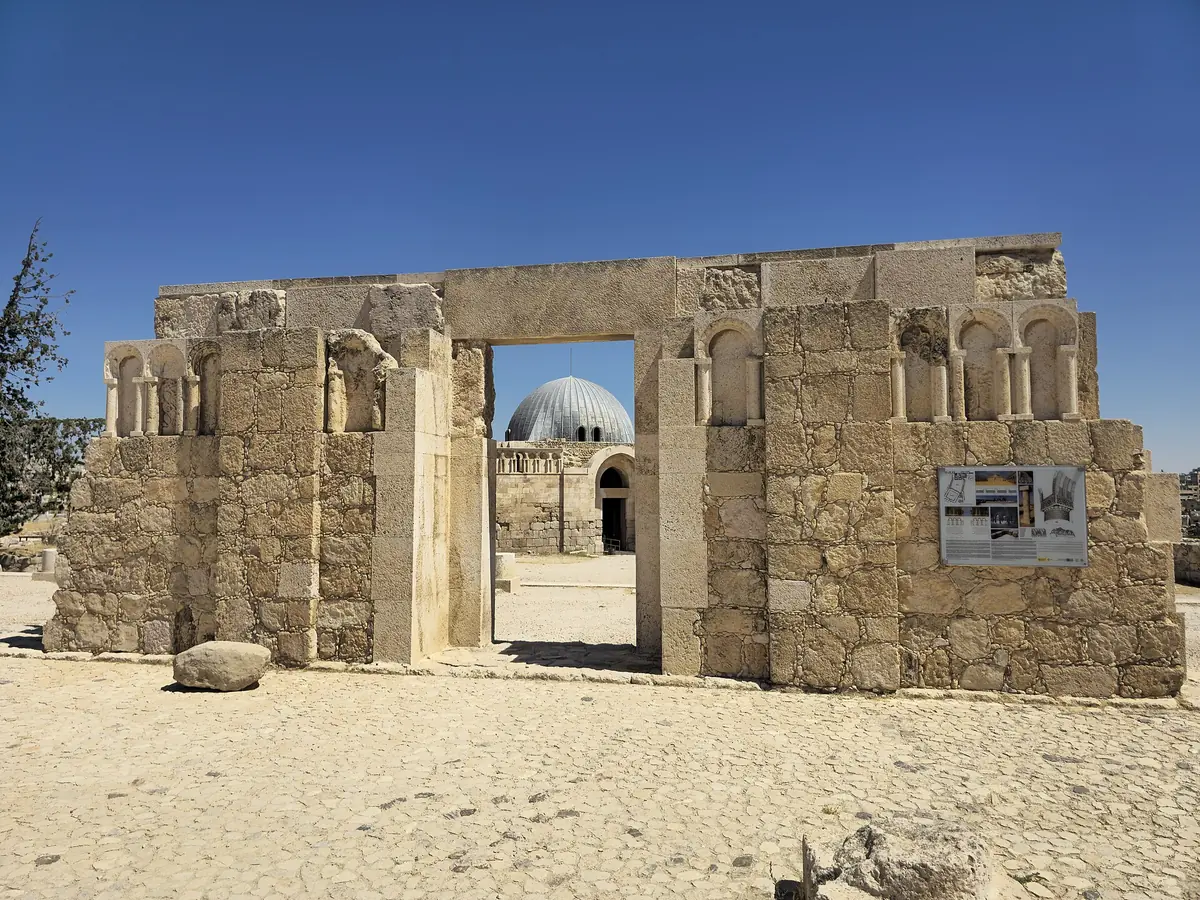
Jabal al-Qal'a, the Citadel hill, is the highest point of old Amman and the place where the first inhabitants of the area lived. Three sights stand on its flat top. The Temple of Hercules keeps a few giant columns standing against the sky, with downtown below them. Nearby, the Umayyad Palace complex opens with a domed audience hall, and the remains of a Byzantine church lie between the two. The Jordan Archaeological Museum, built on the hill in 1951, shows finds from sites across the country under light from high windows.
The Citadel ticket is JOD 3 for foreign visitors, and the Jordan Pass covers it. The Jordan Pass list of attractions gives its hours as 08:00 to 17:00. Come in the morning or late afternoon, when the low light falls on the columns and the view across to the Roman Theatre and Jabal Amman is clearest. From downtown, the gate is a steep climb on foot or a short taxi ride.
Prices and times checked 28 November 2026
Downtown: the Roman Theatre, the souks and the mosques
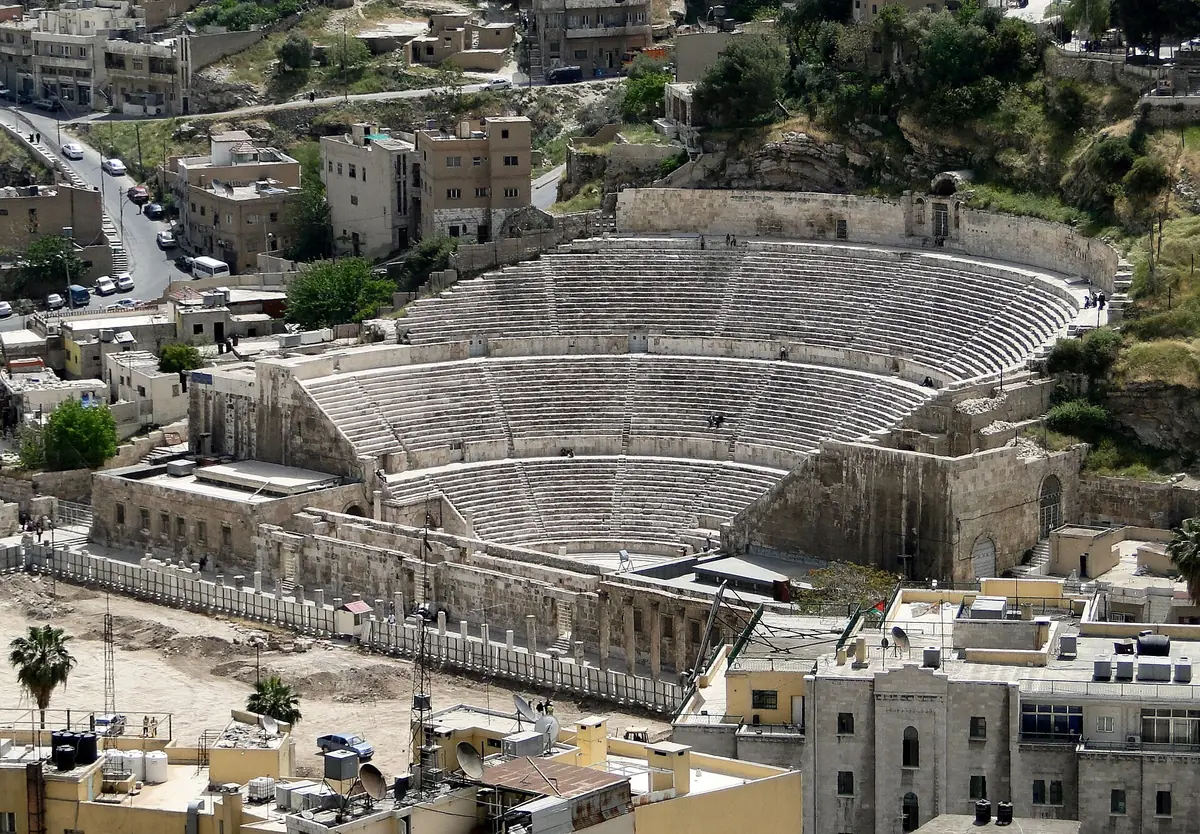
The Roman Theatre dates from the 2nd century AD and is built into the hillside below the Citadel. It seats about 6,000 people and is still used for performances. Two small museums sit in its wings: the Folklore Museum, opened in 1971, and the Museum of Popular Traditions. The foreign-visitor ticket of JOD 2 covers the theatre and both museums, and so does the Jordan Pass. The pass list gives the theatre's hours as 08:00 to 17:00. Beside it stands the Odeon, a smaller restored theatre that seats up to 500 for concerts.
A short walk west, the Grand Husseini Mosque was built by King Abdullah I in 1924 on the site of a much older mosque, and the souks and street-food stalls of downtown spread around it, along with the fruit and vegetable market. Nearby, the Nymphaeum, built in 191 AD, was once a two-storey complex of fountains, mosaics and carved stone. Dress modestly in the souks and cover shoulders and knees at the mosques.
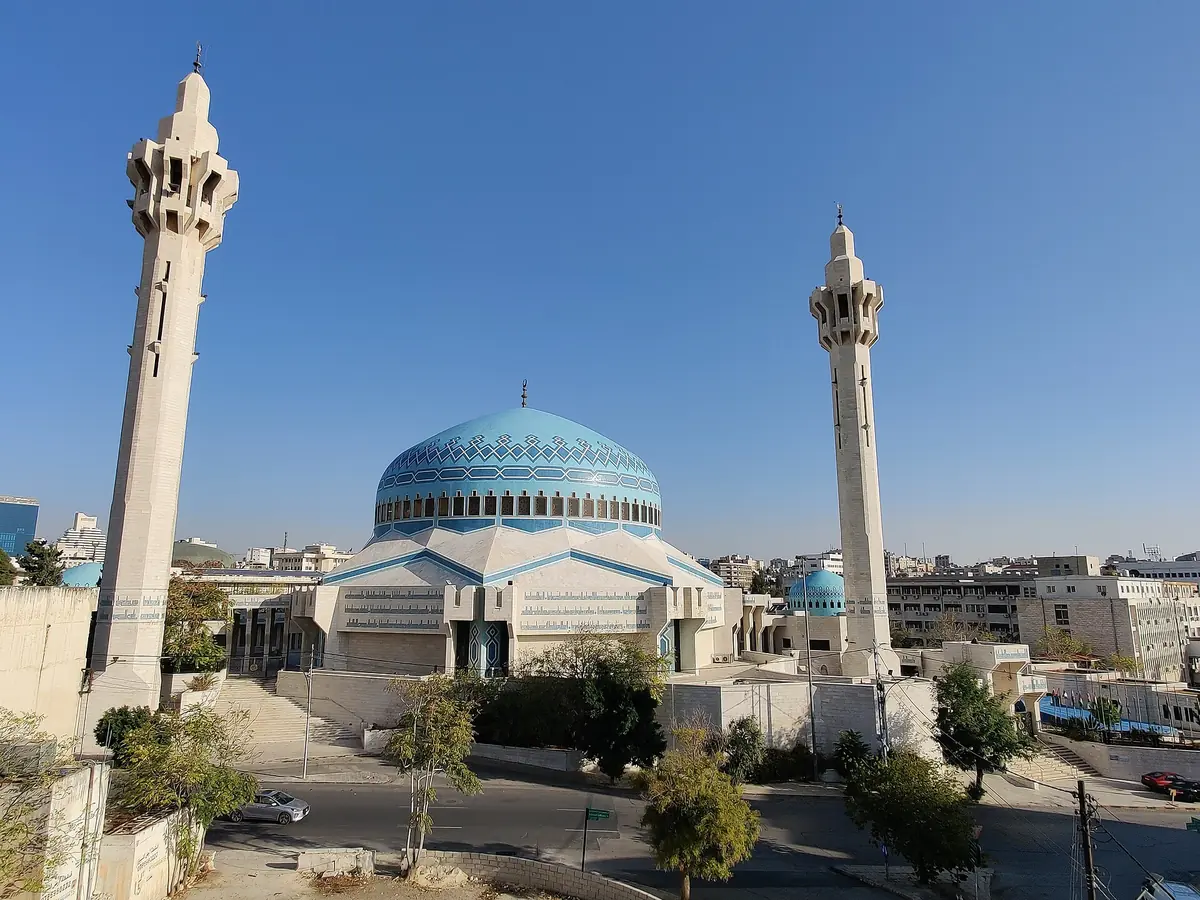
The blue-domed King Abdullah I Mosque is a different building: King Hussein built it as a memorial to his grandfather, and it holds up to 7,000 worshippers inside and 3,000 more in the courtyard. The mosque is easy to combine with a visit to Abdali or the JETT terminal.
Prices and times checked 28 November 2026
The Jordan Museum, Rainbow Street and Jabal al-Weibdeh
The Jordan Museum in Ras al-Ain, the national museum, tells the country's story from the Old Stone Age onwards. Its best-known pieces are the 'Ain Ghazal statues, about 9,700 years old and among the oldest human statues in the world, and fragments of the Dead Sea Scrolls. Foreign visitors pay JOD 5. The museum opens from 09:00 to 17:00 on Saturday, Sunday, Monday, Wednesday and Thursday, and from 15:00 to 18:00 on Friday; it is closed on Tuesday. It suits the arrival afternoon, before the Citadel day.
Rainbow Street in Jabal Amman is one of the oldest streets in the city, now lined with cafés, restaurants and a few galleries, and it is the easy place for an evening walk. In summer, the Souk Jara street market fills a lane nearby on Fridays with stalls, food and live music. Across the valley, Jabal al-Weibdeh has Darat al Funun, an arts centre in a group of old houses overlooking downtown, and the Paris Square neighbourhood with its craft shops and cafés. The Al-Kalha stairway, one of the oldest in Amman, links it with downtown.
Prices and times checked 28 November 2026
Two nights, two full days
Day 3 is usually the drive or the early bus south, so the sights fit into days 1 and 2. The Jordan Museum is closed on Tuesday, so keep it for another day of the week.
- Day 1: arrive, check in, then the Jordan Museum in Ras al-Ain and an evening walk on Rainbow Street. If you land late, keep the museum for day 2 and only walk. Sleep in Amman.
- Day 2: the Citadel at 08:00, then down to the Roman Theatre and its museums, hummus and falafel downtown at lunch, knafeh afterwards, the Grand Husseini Mosque and the souks, and sunset from Jabal al-Weibdeh. Or swap this day for a day trip to Jerash, about 45 km north. Sleep in Amman.
- Day 3: the JETT bus from Abdali at 06:30 to Petra, arriving at 10:30, or a hire car south by daylight; on the way you can stop at Madaba and Mount Nebo.
What to eat and where to look
Hummus and falafel
Chickpea purée with olive oil and fried chickpea patties, eaten with flat bread for breakfast or lunch. Hashem, one of the oldest restaurants in the country, has served them downtown for more than forty years, and its tables are rarely empty.
- Where to look
- Hashem Restaurant's downtown branch, Amman.
- Fit it into your day
- Day 2 lunch, between the Roman Theatre and the souks.
Knafeh
Nabulsi knafeh: a warm tray of white cheese under fine semolina pastry, soaked in syrup. Habibah serves it to queues of people who eat it standing in the lane, as the sweet after a downtown hummus lunch.
- Where to look
- Habibah Sweets, downtown Amman, near Hashem.
- Fit it into your day
- Day 2, after lunch.
Mansaf
Jordan's national dish: lamb cooked in a broth of jameed, dried fermented yoghurt, served over rice on a shared tray and eaten by hand. It marks celebrations and is the meal to order once on the trip.
- Where to look
- Traditional Jordanian restaurants downtown and in Jabal Amman.
- Fit it into your day
- Day 1 or day 2 dinner.
Galayet bandora and manaqeesh
A Jordanian breakfast: tomatoes cooked down slowly in olive oil and eaten from the pan with bread, with manaqeesh, flatbreads baked with za'atar and olive oil.
- Where to look
- Beit Sitti's breakfast session, 16 Mohammad Ali As-Saadi Street, Jabal al-Weibdeh; a group place costs JOD 15.
- Fit it into your day
- Breakfast on a morning in Jabal al-Weibdeh.
Arriving at Queen Alia airport and leaving for Petra
Queen Alia International Airport (AMM) lies about 35 km south of the city. From in front of the arrivals hall, the Sariyah Airport Express bus runs via the Seventh, Sixth, Fifth and Fourth Circles and the Housing Bank Complex to the North Amman Bus Station (Tabarbour). Sariyah's website gives the ticket at JOD 3.40, payable by Visa card, with buses about every half-hour through the day and hourly in the evening, at night and on Fridays; no journey time is published, so check the next departure at the stop. If you fly Royal Jordanian, RJ's City Terminal Shuttle runs every 30 minutes to RJ's City Terminal near 7th Circle for JOD 4 per passenger. Airport taxis wait at the curb outside arrivals; their fares are fixed by the Land Transport Regulatory Commission and posted at the taxi stands, and the regulator's published table gives JOD 21.50 to downtown, Jabal Amman and Jabal al-Hussein. The table is older, so read the board at the stand before you get in. Ride-hailing apps have a booth on the arrivals curbside at Gate 3. The transport guide compares the options across the country.
For Petra without a car, JETT runs a daily bus from its Abdali terminal at 06:30, arriving at 10:30, for JOD 10 a seat, JOD 11 per adult in total when booked online on jett.com.jo; it returns from Petra at 17:00 and reaches Abdali at 21:00. Book it as soon as your dates are fixed. In town, the UK government recommends Uber or Careem over hailing a yellow taxi.
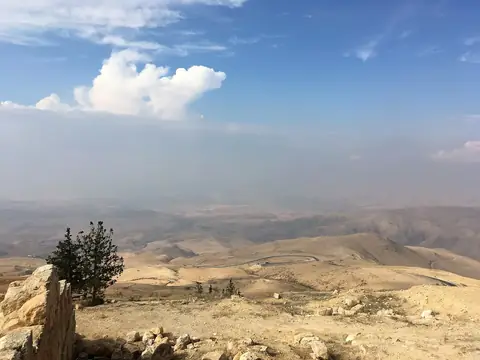
Amman is also the base for day trips: Jerash lies about 45 km north, and Madaba and Mount Nebo about 35 km south, on the way down to the Dead Sea, whose public beaches and resort hotels make a day out of the capital. The desert castles east of the city lie on the road to Azraq, an area France strongly advises against, so this guide leaves them out. Germany advises against non-essential travel to the whole of Jordan outside its border areas, Amman included; our health and safety guide sets out each government's lines.
Prices and times checked 29 November 2026
What two days in Amman cost, beyond the room
About JOD 134 for two, about JOD 67 each, before rooms, for two days of sights, food, taxis in town and the taxi in from the airport.
| Item | For two |
|---|---|
| Citadel, Roman Theatre and Jordan Museum | JOD 20 |
| Food for two days, about | JOD 60 |
| Taxis and apps in town, about | JOD 20 |
| Airport taxi to downtown | JOD 21.50 |
| 10% buffer | JOD 12 |
The model is two adults without the Jordan Pass. Tickets are the foreign-visitor prices on the Jordan Tourism Board's fee list: JOD 3, JOD 2 and JOD 5 per person; the pass covers the Citadel and the theatre, which takes JOD 10 off for two. Food is about JOD 15 a day each, our estimate for falafel and hummus at Hashem, knafeh at Habibah and a simple dinner, since the downtown restaurants publish no prices. The taxi line is an estimate for four or five short app rides. The airport line is one taxi to downtown at the regulator's fixed fare of JOD 21.50; check the board at the stand. The Sariyah bus would cost JOD 6.80 for two. The JETT bus to Petra on day 3 comes on top, JOD 22 for two. Our where-to-stay guide prices hotels in Amman, and the trip cost guide has whole-trip budgets.
Prices and times checked 29 November 2026
Practical questions
How many nights should I stay in Amman?
Two nights give you two full days: one for the Citadel, the Roman Theatre and downtown, one for the Jordan Museum and the hills, or for a day trip to Jerash. One night is enough if you only want the Citadel and the theatre before driving south.
Where should I stay in Amman?
On one of the hills around downtown: Jabal Amman for Rainbow Street, or Jabal al-Hussein and Jabal al-Weibdeh for galleries and quieter streets. The Citadel, the Roman Theatre and the JETT terminal at Abdali are then a walk or a short ride away.
How much are the Citadel and the Roman Theatre?
JOD 3 for the Citadel and JOD 2 for the Roman Theatre for foreign visitors; both are open from 08:00 to 17:00 on the Jordan Pass list, and the pass covers them.
Is the Jordan Museum included in the Jordan Pass?
Plan on paying the JOD 5 foreign-visitor ticket at the door. The Jordan Pass list of opening hours names the Jordan Archaeological Museum on the Citadel, not the national museum in Ras al-Ain. The Jordan Museum is closed on Tuesday.
How do I get from the airport to Amman?
The airport is about 35 km south of the city. Take the Sariyah Airport Express bus to the North Amman Bus Station (JOD 3.40, payable by Visa card, about every half-hour in the daytime), Royal Jordanian's City Terminal Shuttle to 7th Circle for JOD 4 if you fly RJ, an airport taxi at the fixed fare posted at the stand (JOD 21.50 to downtown Amman on the regulator's table), or a ride-hailing car from the app booth at arrivals Gate 3.
How do I get from Amman to Petra by bus?
JETT runs a daily bus from Abdali at 06:30 that reaches Petra at 10:30, for JOD 10 a seat, JOD 11 per adult in total when booked online on jett.com.jo, and returns at 17:00.
How much do two days in Amman cost?
About JOD 134 for two before rooms: the Citadel, Roman Theatre and Jordan Museum, food, taxis in town, the airport taxi and a 10% buffer. The JETT bus to Petra comes on top, and our where-to-stay guide prices the rooms.
Keep planning your trip
Day trips from Amman
Three day trips from an Amman hotel: Jerash and Ajloun, Madaba, Mount Nebo and the Dead Sea, and Salt, with transport, tickets and the trips we leave out.
Read the guide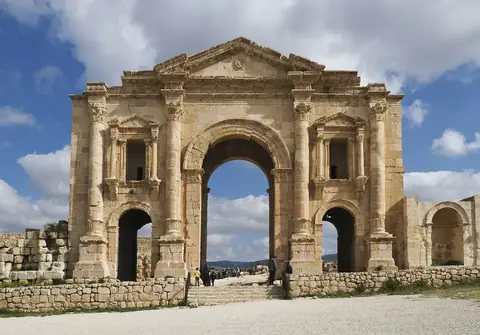
Jerash
See Jerash in a day from Amman: Hadrian's Arch, the Oval Plaza, the colonnaded street and theatres, tickets, seasonal hours, Ajloun Castle and costs.
Read the guide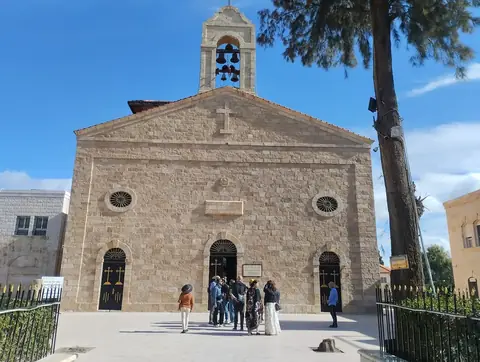
Madaba and Mount Nebo
Madaba and Mount Nebo in half a day: the 6th-century mosaic map, the Archaeological Park, the Memorial of Moses, tickets, the drive and costs.
Read the guide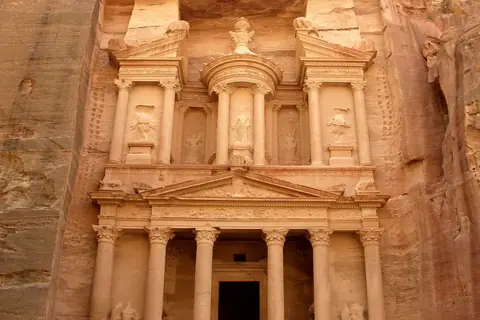
Petra
Two nights in Wadi Musa for Petra: the Siq, the Treasury, the Royal Tombs, the Monastery and the High Place, with ticket prices, hours, Petra by Night and buses.
Read the guide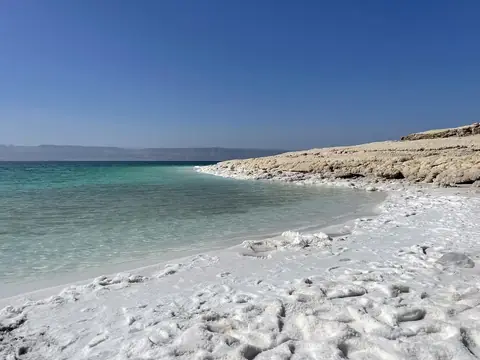
The Dead Sea
Where to float on Jordan's Dead Sea shore: a night on the Sweimeh hotel strip or a day from Amman, the public beaches, Wadi Mujib's Siq Trail and the road on to Petra.
Read the guide
First trip to Jordan
How many days a first Jordan trip needs, the order of Amman, Petra, Wadi Rum and the Dead Sea, how to get between them, and what to book before you fly.
Read the guideSources and checks before you travel
(18)
- Jordan Tourism Board: Amman ↗ — opens in a new tab
- Jordan Tourism Board: entrance fees ↗ — opens in a new tab
- Jordan Pass: included attractions ↗ — opens in a new tab
- Jordan's Museums (Jordan Tourism Board): The Jordan Museum ↗ — opens in a new tab
- Jordan Tourism Board: feasting in Jordan ↗ — opens in a new tab
- Jordan Tourism Board: airports ↗ — opens in a new tab
- Queen Alia International Airport: to and from the airport ↗ — opens in a new tab
- Royal Jordanian: transportation to and from Amman airport ↗ — opens in a new tab
- JETT: live schedule and booking ↗ — opens in a new tab
- Jordan Tourism Board: Jerash ↗ — opens in a new tab
- UK government: Jordan travel advice, safety and security ↗ — opens in a new tab
- German Federal Foreign Office: Jordan, travel and safety advice ↗ — opens in a new tab
- French Ministry for Europe and Foreign Affairs: Jordan, travel advice ↗ — opens in a new tab
- Ministry of Interior: Madaba Governorate ↗ — opens in a new tab
- Beit Sitti: cook and dine ↗ — opens in a new tab
- UK FCDO: Jordan entry requirements ↗ — opens in a new tab
- Sariyah Express: Airport Express ↗ — opens in a new tab
- Land Transport Regulatory Commission: airport taxi fares (Arabic PDF) ↗ — opens in a new tab
Reference sources for the version dated 29 November 2026. Confirm opening times, access, transport and conditions for your travel dates.
Photo credits
(6)
The Temple of Hercules on Jabal al-Qal'a, the Citadel hill above downtown Amman
Photograph: AliAbuRas — opens in a new tab · CC BY-SA 4.0 — opens in a new tab
Changes: Resized and converted to WebP; displayed with responsive crops. · Original photograph and licence details ↗ — opens in a new tab
The Roman Theatre, cut into the hillside below the Citadel, seen from above
Photograph: Bernard Gagnon — opens in a new tab · CC BY-SA 4.0 — opens in a new tab
Changes: Resized and converted to WebP; displayed with responsive crops. · Original photograph and licence details ↗ — opens in a new tab
The Umayyad Palace complex on the Citadel, with the domed audience hall behind its gateway
Photograph: Mohammad hajeer — opens in a new tab · CC BY-SA 4.0 — opens in a new tab
Changes: Resized and converted to WebP; displayed with responsive crops. · Original photograph and licence details ↗ — opens in a new tab
King Abdullah I Mosque in Abdali, built by King Hussein as a memorial to his grandfather
Photograph: Trldp — opens in a new tab · CC BY-SA 4.0 — opens in a new tab
Changes: Resized and converted to WebP; displayed with responsive crops. · Original photograph and licence details ↗ — opens in a new tab
Downtown Amman, its houses climbing the hills on both sides of the valley
Photograph: Raya Sharbain — opens in a new tab · CC BY-SA 4.0 — opens in a new tab
Changes: Resized and converted to WebP; displayed with responsive crops. · Original photograph and licence details ↗ — opens in a new tab
The empty Roman Theatre in Amman on a wet morning, with houses on the hillside behind it
Photo: Yuki Ikemori